Imagine receiving a call claiming your bank account has been compromised or finding what appears to be a lucrative investment opportunity online. In just a few minutes, a single decision can put your savings and personal information at risk. Digital payments, online banking, and e-commerce have transformed the way people in India manage their money. While these services offer speed and convenience, they have also created new opportunities for financial fraud.
Today, online frauds in India have become more sophisticated and can affect anyone who uses digital financial services. As these threats continue to evolve, understanding the risks is essential for making safer financial decisions. This article explores the current online fraud landscape in India, the most common scams, and the practical steps you can take to protect yourself.
Online Frauds in India: The Current Landscape
Almost every digital activity today, whether it’s making a UPI payment, shopping online, booking tickets, or investing through an app, comes with a potential risk of fraud. As our dependence on digital services grows, cybercriminals are finding new ways to exploit the same platforms we trust every day.
As digital payments, online banking, and e-commerce continue to expand, online frauds in India have become a serious financial concern for individuals, businesses, and financial institutions. With more people relying on digital services for everyday transactions, cybercriminals now have a much larger pool of potential targets.
Today’s scams are no longer limited to emails or fake messages. Fraudsters exploit a wide range of digital platforms, including UPI apps, social media, online marketplaces, investment websites, and messaging services. This has made online fraud a widespread problem affecting individuals, businesses, and financial institutions alike. The consequences often go beyond financial loss. Victims may also face identity misuse, account related complications, and lengthy recovery processes, making online fraud one of the biggest challenges in India’s rapidly growing digital economy.
Who Is Most Commonly Targeted?
Online fraud doesn’t target people based on age or technical knowledge alone. Scammers often choose victims based on their online activities, financial habits, or current needs, allowing them to create more convincing approaches. Although online frauds in India can target anyone, scammers often tailor their approach based on a person’s lifestyle, profession, or financial activities. Some of the groups frequently targeted include:
- Students and job seekers, who may come across fake internships, work from home opportunities, or scholarship related scams.
- Senior citizens, who are often approached with fake banking, pension, insurance, or healthcare related claims.
- Online shoppers, especially during festive sales and discount campaigns, where fake websites and counterfeit offers become more common.
- Small business owners and freelancers, who regularly handle invoices and digital payments, making them potential targets for fake payment confirmations or business impersonation scams.
- New investors, who may be attracted by promises of guaranteed returns or exclusive trading opportunities.
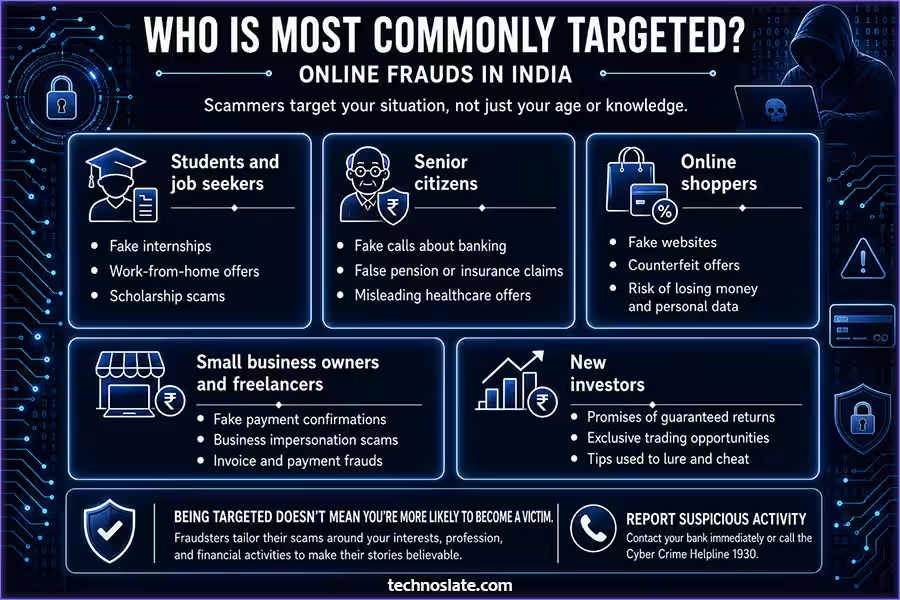
Being targeted doesn’t mean someone is more likely to become a victim. Fraudsters simply tailor their approach to match a person’s interests, profession, or financial activities, making their stories appear more believable.
How an Online Fraud Typically Works
Most online frauds in India follow a predictable sequence, even though the stories used by scammers may differ. The objective is simple: get the victim to take an action that leads to financial loss or unauthorized access. A typical scam usually involves these stages:
- Target Selection: Fraudsters identify potential victims through public information, leaked data, social media, or mass outreach.
- Initial Contact: They reach out through a phone call, text message, email, social media, or a fake website.
- False Request: The victim is asked to transfer money, approve a payment, share sensitive information, or install an application.
- Fund Transfer: Once the request is completed, the money is quickly moved through multiple accounts, making recovery more difficult.
Although the methods vary, the overall process remains largely the same. Recognizing this pattern can help people identify suspicious situations before any financial damage occurs.
Inside the Fraud Ecosystem
Many online frauds are not carried out by a single individual. They are often run by organized groups, with different people handling different parts of the operation. A typical fraud network may include:
- Scammers who contact victims through calls, messages, or social media.
- Technical operators who create fake websites, apps, payment pages, or online profiles.
- Money mules whose bank accounts are used to receive and move stolen funds.
- Cash handlers who quickly transfer or withdraw the money to make tracing it more difficult.
This division of roles allows these groups to operate on a larger scale while making investigations more challenging. Even if one person is identified, uncovering the entire network often requires tracking multiple accounts, devices, and financial transactions.
Types of Major Online Frauds in India
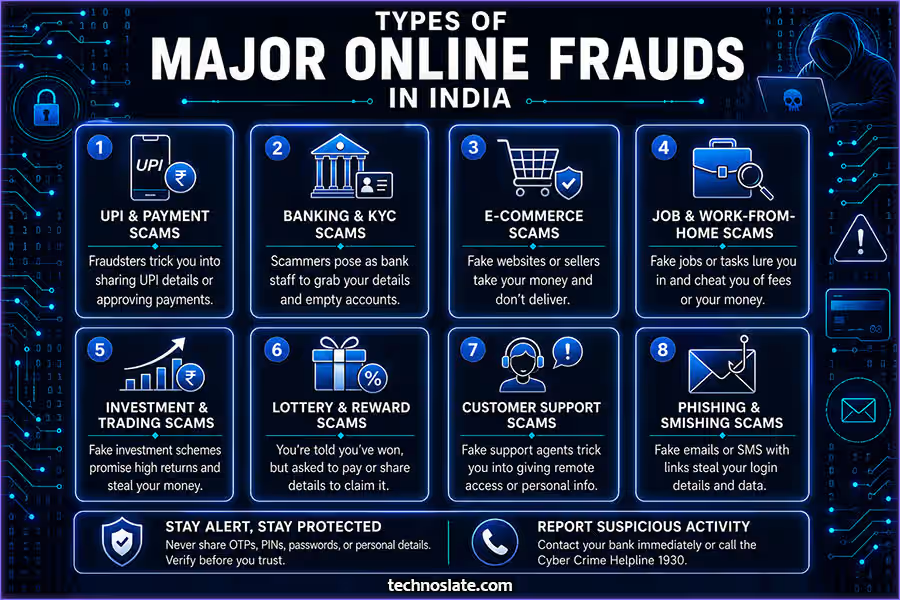
Understanding these online frauds in India can help users recognize suspicious activities before they result in financial loss. Cybercriminals use different tactics to target digital users, but most scams are designed to steal money, personal information, or account access. Some of the most common online frauds in India include:
- Digital Arrest Scam
- Scammers impersonate police officers or officials from agencies such as the CBI, ED, or Cyber Crime Cell. They falsely claim that the victim’s Aadhaar, SIM card, or bank account is linked to criminal activities and demand money for verification or case settlement. To make the story believable, they often use forged identity cards, fake documents, or video calls that resemble official offices.
- Victims are frequently instructed to remain on continuous video calls and are warned not to contact family members or lawyers. Legitimate law enforcement agencies do not demand money over phone calls or video conferences to close criminal cases.
- UPI Payment Frauds
- These scams exploit users rather than weaknesses in the UPI system. Fraudsters send fake QR codes, payment requests, or forged transaction screenshots to trick victims into authorizing payments. Because UPI transactions are processed almost instantly, recovering the money becomes much harder once the payment is approved.
- Scammers may also pretend to be buyers or sellers on online marketplaces to deceive users into making payments. Always verify the purpose of a UPI request before entering your PIN, as the PIN is only required to send money, not receive it.
- Investment and Trading Scams
- Victims are attracted through social media, messaging apps, or online advertisements promising high returns with little or no risk. Fraudsters often display fake profits or allow a small withdrawal initially to build trust. Once larger amounts are invested, withdrawals are blocked or additional payments are demanded under various excuses.
- Many of these schemes falsely claim to be associated with well known financial institutions or celebrities to appear credible. Investors should verify whether a platform is regulated before transferring funds or sharing financial information.
- Task and Part Time Job Scams
- Scammers advertise easy online jobs such as reviewing products, liking social media posts, or rating hotels. They usually pay a small amount at first to appear genuine before asking victims to deposit money to unlock premium tasks or higher commissions. The promised earnings never materialize, and the deposited money is lost.
- Victims are often pressured to complete tasks quickly to qualify for higher payout or bonuses. Genuine employers do not require candidates to pay upfront fees in exchange for work opportunities.
- Fake Loan App Scams
- Fraudulent loan apps promise instant approval with minimal documentation to attract borrowers. After installation, they request unnecessary permissions, including access to contacts, photos, messages, and files. This information is later used for harassment, blackmail, identity misuse, or aggressive recovery tactics.
- Some fake loan providers also impose hidden charges and unrealistic repayment deadlines to trap borrowers in a cycle of intimidation. Download financial apps only from trusted sources and verify that the lender is registered with the appropriate regulatory authorities.
- Remote Access Scams
- Posing as customer support executives or technical experts, scammers convince victims to install remote access software on their devices. Once permission is granted, they can view on screen activity, monitor banking sessions, and in some cases operate the device remotely to facilitate unauthorized transactions.
- They often claim that the software is needed to resolve technical issues, process refunds, or verify accounts. Never install remote access applications at the request of an unknown caller or share access during online banking sessions.
- SIM Swap Fraud
- Fraudsters obtain a duplicate SIM card linked to the victim’s mobile number, causing the original SIM to stop working. Once they receive OTPs and banking alerts on the new SIM, they can reset passwords and gain access to accounts that rely on mobile based authentication.
- A sudden loss of mobile network service without explanation can be an early warning sign of a SIM swap attack. Contact your mobile service provider immediately if your SIM becomes inactive unexpectedly or you notice unauthorized account activity.
- Fake Customer Support Scams
- Cybercriminals publish fake customer care numbers through search results, advertisements, or social media posts. People seeking help unknowingly contact the scammer, who then asks for confidential information, payment details, or requests remote access under the guise of resolving the issue.
- Scammers may also ask victims to make small verification payments or disclose OTPs during the conversation. Always obtain customer support contact details from the company’s official website or mobile application.
- AI Voice and Deepfake Scams
- Advances in artificial intelligence have made impersonation far more convincing. Fraudsters can generate realistic voice clips or videos that mimic family members, colleagues, or company representatives, making fraudulent requests appear genuine and much harder to identify.
- These scams often create a sense of urgency by claiming there has been an emergency or immediate financial need. Confirm unexpected requests through an independent communication channel before sending money or sharing sensitive information.
Common Red Flags to Watch For
Online scams may look different on the surface, but many of them share the same warning signs. Learning to spot these early can help you identify suspicious situations before they turn into financial losses. Regardless of the scam type, many online frauds in India display similar warning signs that should never be ignored. A single warning sign doesn’t always mean it’s a scam, but multiple red flags appearing together should never be ignored. Some common red flags include:
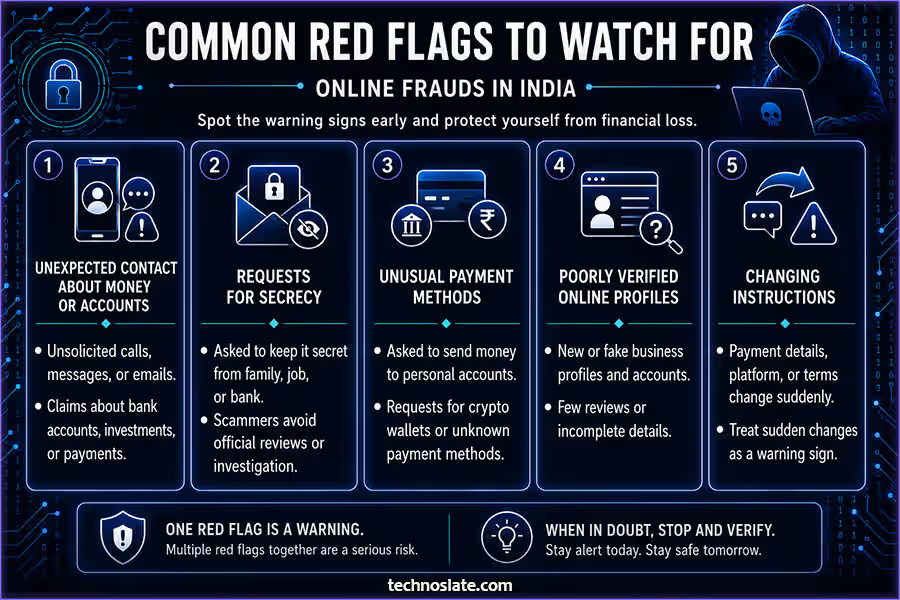
- Unexpected contact about money or accounts: Be cautious if you receive an unsolicited call, message, or email asking you to discuss your bank account, investment, or payment.
- Requests for secrecy: Fraudsters may tell you not to inform your family, employer, or bank, claiming the matter is confidential or part of an official investigation.
- Unusual payment methods: Requests to transfer money to a personal account, cryptocurrency wallet, or unfamiliar payment method should always raise suspicion.
- Poorly verified online profiles: Fake businesses and customer support accounts often have recently created social media pages, limited reviews, or incomplete contact information.
- Changing instructions: If the person you’re dealing with suddenly changes payment details, asks you to switch platforms, or introduces new conditions midway, treat it as a warning sign.
Why People Fall for Online Frauds
Online fraud can affect anyone, regardless of age, education, or technical knowledge. Many scams succeed because people make quick decisions in unfamiliar or high pressure situations. Some of the most common reasons people become victims include:
- Acting without verification: Many people approve payments, share information, or follow instructions without confirming whether the request is genuine.
- Chasing attractive offers: Promises of guaranteed profits, instant loans, high paying part time jobs, or exclusive deals can encourage people to overlook obvious warning signs.
- Ignoring small red flags: Minor inconsistencies, such as unusual payment requests, poor grammar, or unofficial contact details, are often dismissed until it’s too late.
- Overconfidence: People who believe they cannot be scammed are sometimes less likely to question unexpected requests or double check important transactions.
- Sharing too much personal information: Details shared on social media or other public platforms can help fraudsters create more convincing and personalized scams.
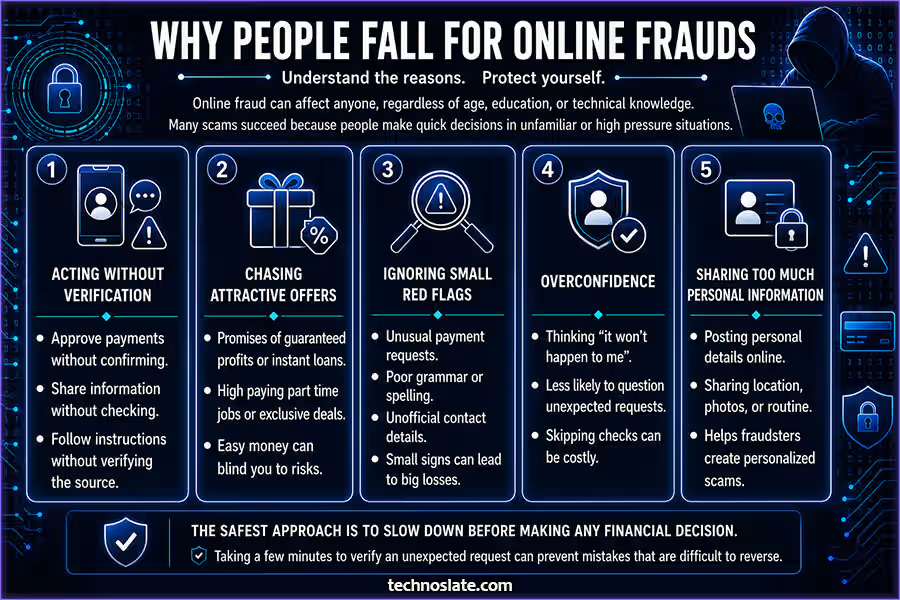
The safest approach is to slow down before making any financial decision. Taking a few minutes to verify an unexpected request can prevent mistakes that are difficult to reverse.
How Authorities Are Responding
As online fraud continues to rise, government agencies, banks, and payment service providers are strengthening their efforts to detect and respond to financial cybercrime. One of the key initiatives is the Indian Cyber Crime Coordination Centre (I4C), which works with law enforcement, financial institutions, and telecom operators to improve coordination and tackle cybercrime more effectively. To help victims report fraud quickly, the government has also introduced:
- 1930 Cyber Crime Helpline: A dedicated helpline for reporting financial cyber frauds.
- National Cyber Crime Reporting Portal: An online platform where individuals can file cybercrime complaints and upload supporting evidence.
Banks and payment platforms are also investing in real time fraud detection, transaction monitoring, and additional identity verification to identify suspicious activity before it causes further damage. At the same time, law enforcement agencies are increasingly focusing on dismantling organized fraud networks instead of investigating isolated incidents.
How to Protect Yourself from Online Frauds
While no security measure can eliminate online fraud completely, a few simple habits can significantly reduce your risk. Developing safe digital habits is one of the most effective ways to reduce the risk of online frauds in India.
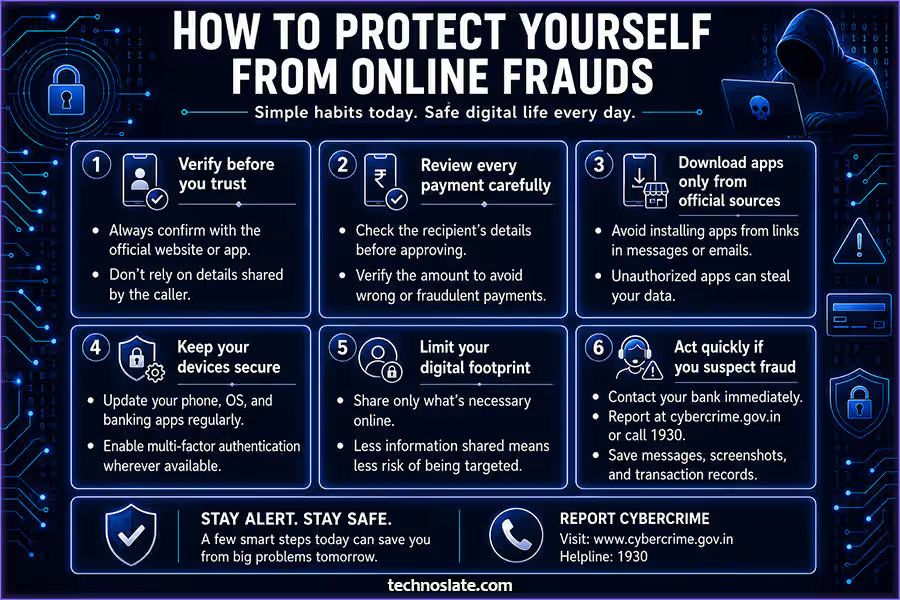
- Verify before you trust. If someone claims to represent a bank, government agency, or company, contact the organization using its official website or mobile app instead of relying on the information shared by the caller.
- Review every payment carefully. Before approving a UPI request or bank transaction, check the recipient’s details and the payment amount to avoid accidental or fraudulent transfers.
- Download apps only from official sources. Avoid installing applications through links received in messages, emails, or social media, especially if they request unnecessary permissions.
- Keep your devices secure. Regularly update your phone, operating system, and banking apps, and enable multi factor authentication wherever available.
- Limit your digital footprint. Avoid sharing unnecessary personal information online, as it can be misused to create targeted scams.
If you suspect you’ve been targeted, contact your bank immediately, report the incident through the official cybercrime reporting channels, and save any messages, screenshots, or transaction records that may help during the investigation.
The Future of Online Frauds in India
As digital technologies continue to evolve, online fraud is expected to become more sophisticated. Cybercriminals are increasingly using artificial intelligence, automation, and stolen personal data to create scams that appear more realistic and personalized.
At the same time, banks, payment platforms, and technology companies are adopting advanced fraud detection systems that use behavioral analysis, device intelligence, and machine learning to identify suspicious activity more quickly.
The fight against online fraud will continue to evolve on both sides. While security measures are becoming stronger, scammers are constantly adapting their tactics. As a result, staying informed about emerging fraud trends will remain essential for anyone who uses digital financial services.
Conclusion
Online frauds in India have become an unfortunate reality of the country’s growing digital economy. As financial services continue to move online, staying informed is just as important as using secure technology.
No one can eliminate the risk entirely, but informed decisions and a cautious approach can significantly reduce the chances of becoming a victim. The more familiar you are with evolving fraud tactics, the better prepared you’ll be to protect your money and personal information.
Frequently Asked Questions (FAQs)
- Can money lost in an online fraud be recovered?
- Recovery is possible in some cases if the fraud is reported immediately. The sooner your bank and the cybercrime authorities are notified, the better the chances of tracing or freezing the transaction before the funds are moved.
- Is it safe to use public WiFi for online banking?
- Public WiFi is generally not recommended for banking or financial transactions because unsecured networks can expose sensitive data. A trusted private network or mobile data is a safer choice.
- Should I report an attempted scam even if I didn’t lose money?
- Yes. Reporting attempted fraud helps authorities identify scam patterns, block fraudulent accounts, and warn other users before more people are affected.
- What should I do if I accidentally share my banking details?
- Contact your bank immediately, change your account passwords or PINs if applicable, and monitor your account for any unauthorized transactions. Acting quickly can help limit potential damage.
- How long should I keep payment receipts and transaction records?
- It’s a good practice to retain important transaction records for several months, especially for high value payments. These records can help resolve disputes and support investigations if required.
I hope you enjoyed this post about what are major online frauds in India and how to protect yourself. If you found this blog helpful, please share this post with your friends and family. If you have any question in your mind or you are facing any problem then feel free to ask your question in the comment section. We will try our best to help you. You can read more such interesting articles here.