For years, creating a Google account automatically included 15GB of free cloud storage. Most people never thought twice about it. Emails stayed in Gmail, photos synced through Google Photos, and documents were saved in Drive as part of a normal digital routine. Over time, that free storage quietly became one of the most important parts of the Google ecosystem. Now, that familiar system appears to be changing for some users.
What Is Google’s 5GB Storage Test
Recent reports suggest that certain newly created Google accounts are starting with only 5GB of free storage instead of the standard 15GB. The discussion around Google’s 5GB storage test has grown quickly because many users see cloud storage as an essential feature rather than an optional extra.
Google has confirmed that it is testing a revised Google storage policy in selected regions. At the moment, the change does not appear to affect everyone globally, but it has already raised questions about whether the company is slowly reshaping its free cloud storage model.
Google has not announced a permanent replacement for the old system. The company continues to describe the situation as a limited test, meaning the current Google account storage experience may vary depending on region or account verification status.
What Exactly Changed Google’s 5GB Storage Test
The main change is connected to new account creation. Traditionally, every Google account received 15GB of free space immediately after signup. That storage was shared across Gmail, Google Drive, and Google Photos. Users could begin using all services normally without additional requirements related to storage access. Now, some users report seeing only 5GB available during account setup.
In some cases, users may receive access to higher storage limits after completing extra verification or security checks. This shift is why terms like Google free storage limit and 15GB to 5GB storage have started trending online. Another important detail involves wording changes on some support pages.
Instead of clearly stating “15GB free storage,” certain pages now use the phrase “up to 15GB.” Small language changes like this often attract attention because they can signal broader adjustments to a company’s long term service structure.
How Google Storage Works
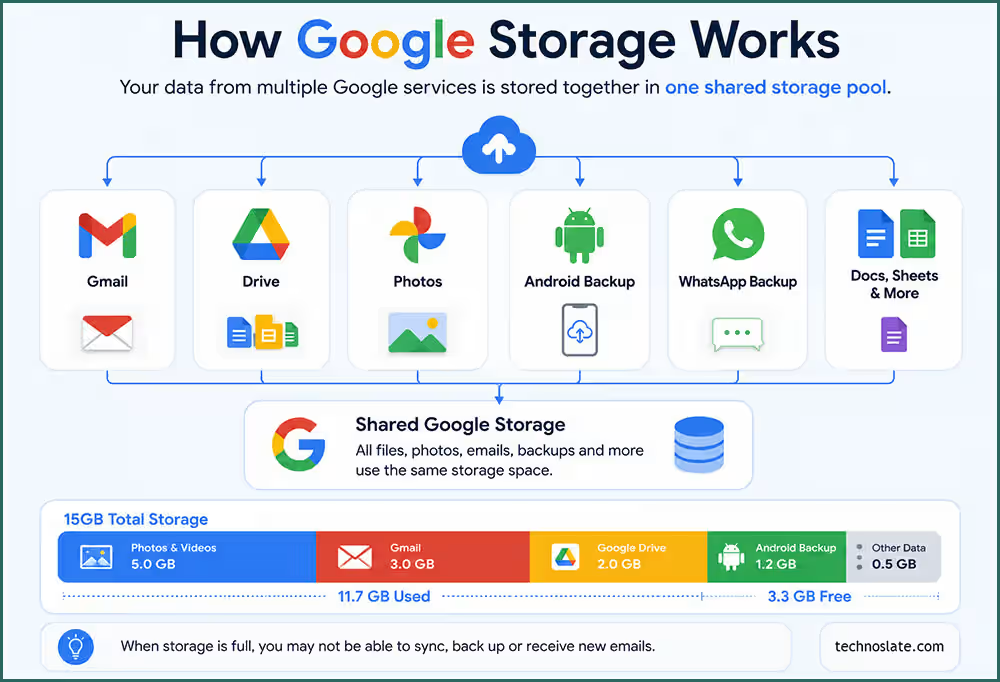
Understanding how Google storage works explains why this topic matters to so many users. Google does not separate storage between its major services. Gmail emails, Google Drive files, and Google Photos backups all use the same shared storage pool attached to a single account. Once that limit starts filling up, users can experience restrictions across multiple services at the same time.
For Android users, the connection goes even deeper. Device backups, synced contacts, app data, and media uploads can all consume storage automatically in the background. Even users who rarely open Drive directly may still depend heavily on Google cloud storage change policies without realizing it.
This is also why the possible Google Drive storage limit adjustment matters beyond just file saving. Cloud storage now supports phone backups, account syncing, and long term digital storage for millions of people. A smaller limit can affect everyday usage much faster than many users expect.
Why 5GB Matters in Real Usage
A 5GB limit sounds reasonable until modern file sizes are considered in real world use. Today’s smartphones capture much larger photos and videos than older devices. High resolution images, 4K recordings, edited clips, and downloaded media can consume Google storage surprisingly fast. Even casual users can fill several gigabytes without intentionally storing large files.
Email usage has also changed over time. PDFs, presentations, screenshots, contracts, and media attachments continue accumulating inside Gmail accounts year after year. As a result, the practical impact of the new Google free storage limit becomes easier to understand. Automatic backups add another layer to the issue. Many Android users keep backup systems enabled because they simplify phone recovery and protect personal data. Since backups run continuously in the background, storage usage increases steadily over time.
This is why the growing conversation around Google’s 5GB storage is not only about numbers. Cloud storage has become part of daily smartphone use. For many people, reducing available space affects routines they barely think about anymore.
Who Is Affected Right Now
Based on current reports, the test appears to involve mainly newly created accounts. Existing users do not appear to be losing storage from their accounts right now. There has also been no official statement suggesting that all current users will suddenly move from 15GB to 5GB in the near future.
The rollout itself still seems limited rather than global. Reports are coming from selected regions, which supports Google’s statement that this is still an experiment rather than a finalized worldwide Google storage policy. That uncertainty is one reason the topic continues gaining attention.
Users are trying to understand whether the current 15GB to 5GB storage reports represent a temporary test or the beginning of a larger long term shift.
Why Google May Be Testing This Policy
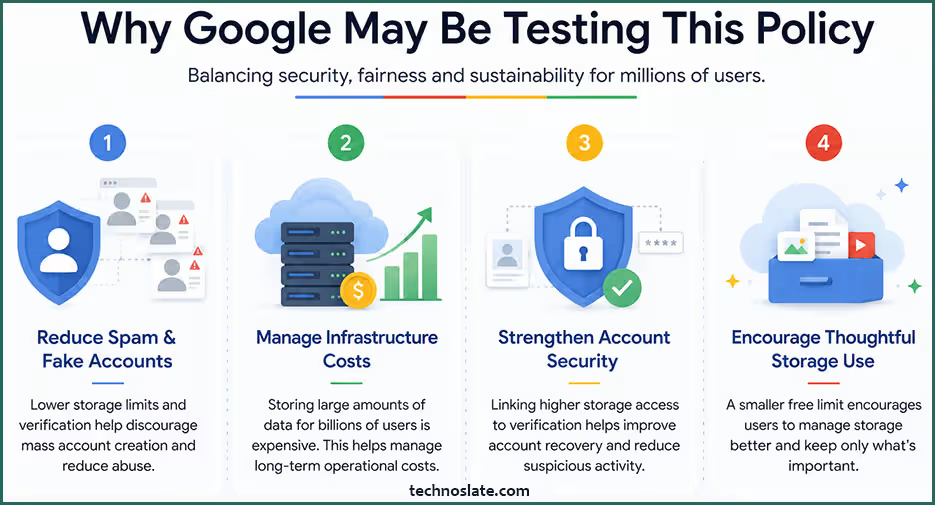
Although Google has not fully explained every reason behind the test, several practical factors likely contribute to the decision. One major issue could be spam and fake account creation. Large free storage allocations can encourage people to create multiple accounts only for extra Google storage space. Smaller limits combined with stronger verification systems may help reduce abuse.
Cloud infrastructure costs are another realistic factor. The amount of data uploaded to Google services continues increasing every year. Photos, videos, backups, synced files, and email attachments all require long term storage infrastructure, maintenance, and energy resources. Security may also play a role in the evolving Google account storage system.
If higher storage access becomes connected to additional verification, Google could strengthen account recovery systems while reducing suspicious activity across its platform ecosystem. None of this means Google is ending free storage entirely. However, the current Google cloud storage change test shows how technology companies are becoming more careful about how much free storage they provide automatically.
What This Could Mean Going Forward
Even though the current situation is still being described as a test, it reflects a larger trend across online services. Digital storage needs continue growing because smartphone cameras, apps, and cloud syncing systems now handle far larger amounts of data than they did a few years ago.
As usage increases, maintaining large free storage pools becomes more difficult for companies at massive scale. For users, future changes to the Google Drive storage limit could mean paying closer attention to storage management. People may become more selective about backups, synced media, and unused files instead of treating cloud storage as unlimited. At the moment, the future of Google’s 5GB storage remains uncertain.
Google has not announced a permanent global rollout, and existing users still appear unaffected. Still, the ongoing test clearly shows that cloud storage is becoming a more valuable and closely managed resource than it was during the earlier years of online services.
I hope you enjoyed this post about Google’s 5GB Storage test. If you found this post helpful, please share this post with your friends and family. If you have any question in your mind or you are facing any problem then feel free to ask your question in the comment section. We will try our best to help you. You can read more such interesting articles here.